Surfaces Designed for Appearance and Function
Stamped Concrete in El Paso for properties where decorative surface patterns need to withstand high desert weather without ongoing maintenance requirements
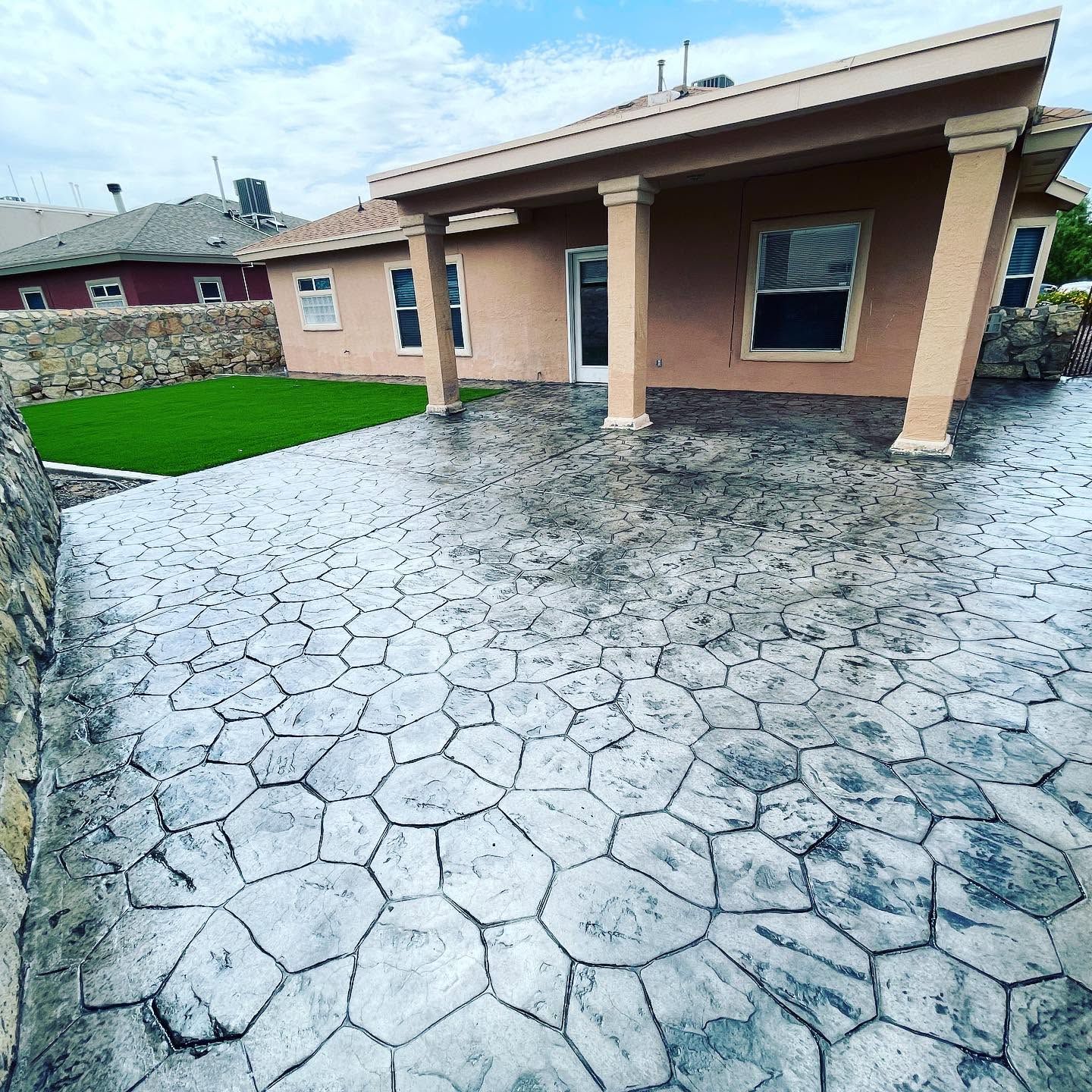
Stamped concrete replicates the appearance of slate, flagstone, brick, or tile while maintaining the structural integrity and weather resistance of solid concrete. The process involves pressing pattern mats into freshly placed concrete to create texture and relief, combined with integral color or surface-applied stains that produce varied tones resembling natural materials. Ferreiro Concrete installs stamped concrete for patios, walkways, and outdoor gathering areas across El Paso, where the decorative finish must perform through temperature extremes and intense UV exposure that fade many surface treatments. Pattern selection and color choices are customized to complement your home's architecture and existing landscape materials.
The installation requires precise timing—stamps are applied when concrete reaches the correct firmness to hold pattern detail without distortion, and color is integrated or applied before texturing begins. A sealer coat follows after curing to protect the surface and deepen color intensity. Proper joint placement within the stamped area prevents cracking that disrupts the decorative pattern.
Request a design consultation to review pattern options and color combinations that work with your property's style.
What Changes After Stamped Installation Completes
Stamped concrete provides visual detail that mimics premium materials but eliminates the maintenance issues those materials create—grout lines that trap debris and require cleaning, individual units that shift or settle unevenly, or surfaces that absorb stains and moisture. The stamped pattern creates texture underfoot while maintaining a continuous surface without trip hazards at seams. Color variation across the surface produces depth and realism that distinguishes decorative concrete from flat, monochromatic slabs.
Once sealed and cured, you'll see a finished surface that resists fading from sun exposure and holds up to foot traffic, furniture weight, and normal outdoor use. The texture provides traction without the rough feel of exposed aggregate, and the sealed surface repels water and resists staining from common outdoor contaminants. Maintenance involves periodic cleaning and resealing every few years rather than the grouting, releveling, or replacement that natural stone and pavers eventually require.
Decorative concrete installations include pattern stamping and base color, with additional color layering available as an upgrade. The sealer protects the surface but requires reapplication on a schedule that depends on traffic levels and UV exposure. Edge details and borders can incorporate contrasting patterns or colors to define spaces within larger stamped areas.
Common Questions About Decorative Concrete
Property owners considering stamped concrete typically want to understand how it differs from standard concrete and what performance to expect.
What patterns replicate natural materials most convincingly?
Slate and flagstone patterns with irregular edges and varied piece sizes create realistic stone appearance, while ashlar patterns mimic cut stone, and cobblestone or brick patterns work for traditional architectural styles.
How does color stay visible in El Paso's intense sunlight?
Integral color mixed throughout the concrete provides permanent base tone that doesn't wear off, while UV-stable sealers protect surface color layers and prevent the bleaching that untreated decorative surfaces experience.
Why choose stamped concrete over pavers or natural stone?
Stamped surfaces eliminate the weed growth and ant colonization that happens in paver joints, prevent the individual unit settling that creates uneven walking surfaces, and avoid the moisture absorption that causes stone to stain or spall.
What maintenance does stamped concrete require long-term?
Routine cleaning removes dirt and debris, while resealing every two to four years maintains surface protection and color depth depending on traffic exposure and weather conditions.
When should stamped concrete be avoided?
Areas requiring frequent cuts or modifications, surfaces with complex drainage requirements that need multiple slope changes, or projects where budget constraints make standard concrete more practical.
Ferreiro Concrete matches stamped concrete patterns and colors to each property's aesthetic while ensuring the installation meets structural and drainage requirements. Schedule a free design consultation to explore pattern samples and discuss how decorative concrete fits your outdoor project.